Resume
At a Glance
LookLab
Helping fashion retailers make smarter sourcing decisions through explainable AI and data-driven insights.
Context
Role
Product Designer & UX Researcher
Timeline
14 weeks
Platform
B2B SaaS Web application
My Contribution
I helped lead the end-to-end design of LookLab, an AI-powered sourcing platform that connects independent retailers with emerging fashion designers while transforming inventory data, trend analysis, and market insights into actionable purchasing decisions.
Working closely with our client and fashion industry experts, I conducted user research, synthesized insights into product strategy, explored multiple design directions, and designed the core product experience through iterative prototyping and usability testing.
Fashion retailers make purchasing decisions months before products ever reach their shelves. Every sourcing decision represents a financial commitment, and selecting the wrong inventory can lead to excess stock, missed trends, and lost revenue.
For independent retailers, these decisions are often made using fragmented information spread across trend reports, wholesale marketplaces, spreadsheets, and supplier communications. While AI has the potential to simplify this process, recommendations
that lack transparency can create hesitation instead of confidence.
LookLab explored how explainable AI could help retailers make faster, more informed sourcing decisions without replacing their expertise.
Current Experience
“I need to check three different sources for products.”
“I’m not sure this is the right product for my store.”
“I hope this product will sell well.”
“I don’t know how to best reach this designer.”
With LookLab
“I have all the information in one place.”
“I understand why this product fits.”
“I know how well this product sold at other stores.”
“I can connect with the designer immediately.”
The opportunity wasn't to automate sourcing. It was to help retailers make confident decisions by turning fragmented information into actionable insight.
Core Experience
Problem
Solution
Rather than replacing retailers' expertise, we designed AI to augment decision-making.
LookLab brings together inventory intelligence, product discovery, trend forecasting, and designer collaboration into a single sourcing workflow. This helps retailers move from identifying opportunities to building relationships with emerging designers.

Identify high and low-performing products using sell-through insights and inventory health.
Understand Inventory


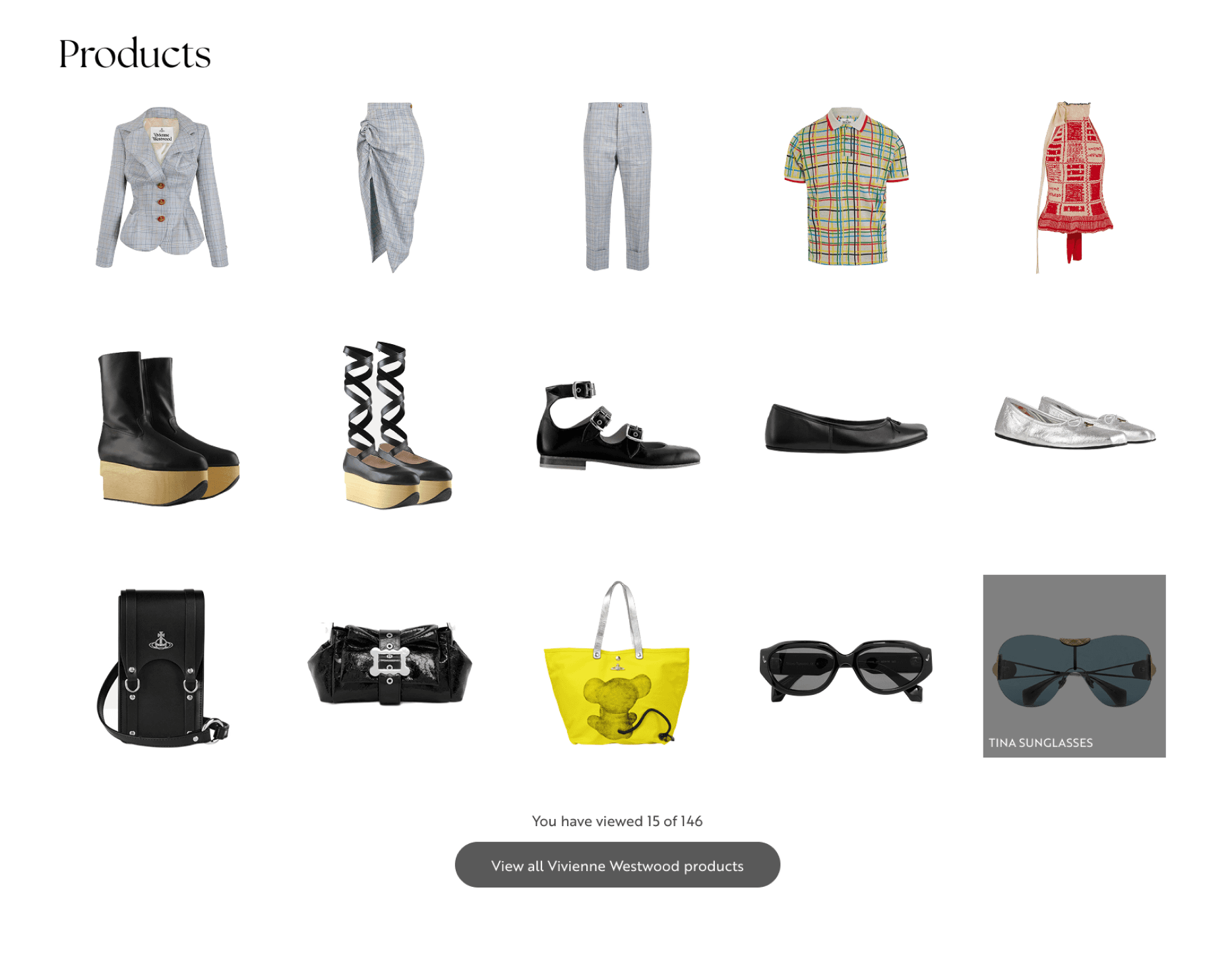
Browse visually curated collections with powerful filters and AI-assisted recommendations.
Discover Products


Connect emerging fashion trends with products to make more informed purchasing decisions.
Validate Trends

Explore designer portfolios, brand stories, and performance metrics before reaching out.
Evaluate Designers

Initiate conversations directly within the platform to streamline sourcing partnerships.
Connect
Impact
Through multiple rounds of concept validation and usability testing with fashion retailers, LookLab evolved from a collection of feature ideas into a focused product strategy centered on trust, transparency, and informed decision-making. User feedback directly shaped improvements to recommendation transparency, product information, navigation, filtering, and terminology, resulting in a more intuitive and credible sourcing experience designed to help retailers evaluate opportunities and make purchasing decisions with greater confidence.
Learnings
Retailers questioned AI recommendations
Product information wasn’t sufficient
Product discovery felt overwhelming
Trend insights lacked credibility
Terminology caused confusion
Iterations
Added rationale explaining why products were recommended
Expanded pricing, MOQ, lead time, and other product details
Added more granular filtering
Added sources and references
Replaced ambiguous abbreviations like “STR” and “RECS”
Want to see the research?
Explore the Usability Testing & Design Iterations
Reflection
Designing AI is ultimately about designing trust.
LookLab taught me that the value of AI isn't in making decisions for people, but in giving them better information and confidence to make those decisions themselves. Our research repeatedly pushed us toward transparency: explaining recommendations, surfacing relevant product context, and reducing ambiguity throughout the sourcing process.
The project also reinforced the importance of product thinking before pixels. The strongest design decisions came from narrowing the problem, prioritizing the workflows that mattered most, and letting research challenge our assumptions. As a designer, I want to carry that mindset forward: use research to identify the right problem, strategy to focus the solution, and design to make complex systems feel clear and trustworthy.
Lessons Learned: Use research to identify the right problem, strategy to focus the solution, and design to make complex systems feel clear and trustworthy.
Full case study in progress