Resume
At a Glance
Social Media Histories Project
Turning decades of social media design into an archive people can actually explore, understand, and learn from.
Context
Role
Product Designer & UX Researcher
Timeline
14 weeks
Platform
Responsive web platform
Social Media Histories is a new digital archive documenting the evolution of social media interfaces. The project combines digitized legacy interfaces with structured metadata and contextual information so people can study how digital experiences have changed over time.
The archive needed to serve fundamentally different ways of using historical information, from researchers looking for specific evidence to people simply exploring how familiar interfaces evolved.
My Contribution
I helped define how a new digital archive could organize, connect, and present historical social media interfaces. I translated diverse user needs and comparative research into the product's information architecture, core user flows, metadata hierarchy, and interaction patterns.
I also designed and prototyped the core archive experience, including discovery, timelines, content details, related content, citation, and comparison workflows, and iterated on the experience through usability testing.
Why It Matters
Social media has a design history. We needed a way to explore it.
Interfaces that feel familiar today are the result of years of incremental design decisions. But those changes are difficult to understand when historical screens exist only as scattered screenshots, webpages, or isolated artifacts.
The opportunity was bigger than digitizing old interfaces.
We needed to create a system that connected those artifacts into a coherent story.
One Archive. Different Questions
Social Media Histories
Journalists & Media
“Can I find and verify historical evidence?”
Find and verify historical evidence
Policymakers
“What can this history reveal about social media's impact?”
Understand design’s broader impact
General Public
“How did the interfaces I know change over time?”
Explore how familiar interfaces changed
Researchers
“How did social media design evolve?”
Study design evolution
Educators & Students
“How can I use these examples to teach?”
Teach and learn from historical examples
The Core Design Challenge
Design Challenge
How do you make a complex archive feel simple without hiding its complexity?
decades of social media interfaces
Each historical interface carried multiple dimensions: from platform and date to feature, device, source, and context. The challenge was organizing these relationships into a system that could support different ways of exploring the archive.
Historical interfaces, rich with context
Platform
Facebook · Instagram · TikTok · LinkedIn · Additional Platforms
Source Date
2006 - 2024
Feature
Profile · Monetization · Creative Tools · Additional Features
Device
Web · Mobile · iOS · Android
Source
URL · Citation · Reference
Context
Description · Impact · Related
Organizing a complex archive for exploration

Primary Metadata
Platform: TikTok
Source Date: 2019
Feature: Creative Tools, Edit
Device: Mobile
Secondary Metadata
Source: TikTok Newsroom
Context: Introducing Edit Feature

Primary Metadata
Platform: LinkedIn
Source Date: 2024
Feature: Profile
Device: Web
Secondary Metadata
Source: LinkedIn Pulse
Context: LinkedIn Launches Premium Company Pages

Primary Metadata
Platform: Facebook
Source Date: 2006
Feature: Feed
Device: Web

Primary Metadata
Platform: Instagram
Source Date: 2014
Feature: Discover, Explore, Edit
Device: Mobile
Secondary Metadata
Source: Instagram Blog
Context: New Discover Feature Added to Explore and Caption Editing
Three ways to explore
Discover
“What am I looking for”
Search · Browse · Filter
Understand
“What am I looking at”
Details · Context · Source · Related
Compare
“How did this change”
Timeline · Evolution · Comparison
Core Experience


Search, browse, filter, and navigate the archive based on platform, year, feature, and other metadata.
Discover

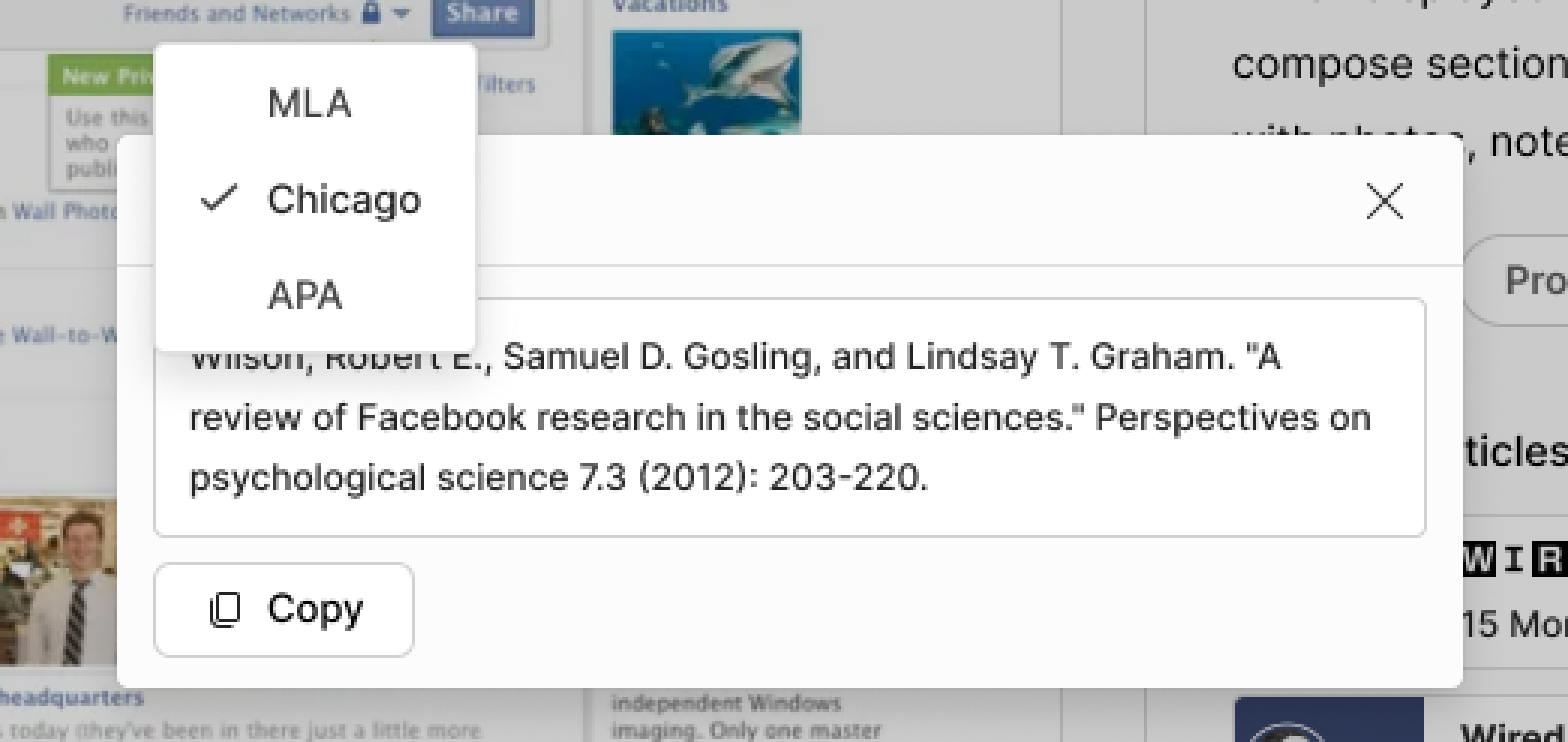
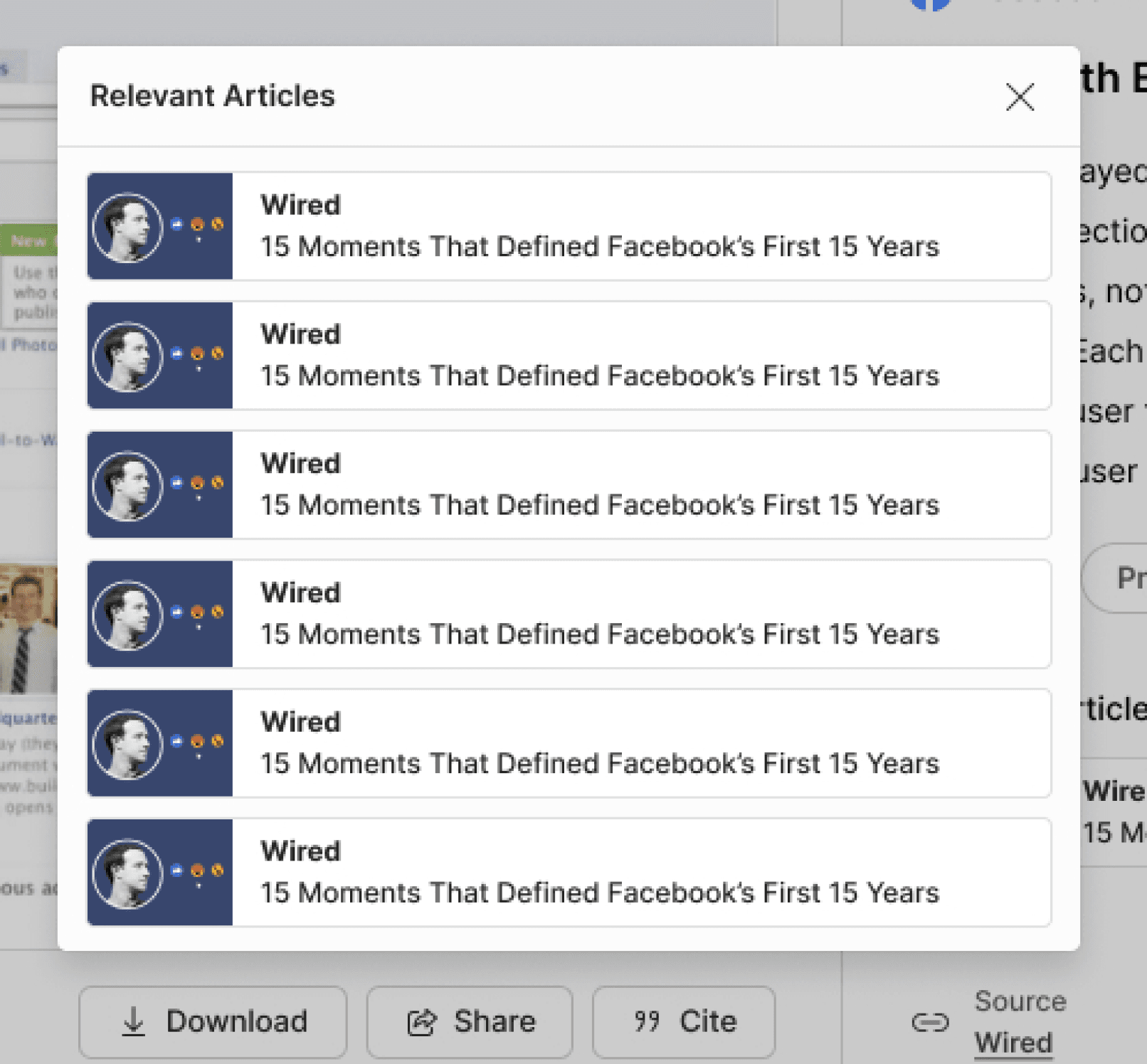
Explore an individual interface with its historical context, metadata, sources, citations, and related content.
Understand

Use timelines and comparison workflows to understand how features and interfaces changed over time.
Compare
Impact
From a collection of artifacts to a system for understanding change
The design established a foundation for turning digitized historical interfaces into an explorable research and learning experience, helping users move from finding an artifact to understanding its context and seeing how social media design evolved over time.
Before
Individual historical screens
Different ways of finding information
Screens without broader context
Historical snapshots
Sources separated from content
View individual designs
After
Connected historical artifacts
Structured discovery
Metadata + related content
Evolution over time
Source + citation built into the experience
Discover → understand → compare
Reflection
Designing for complexity is often about designing relationships, not removing information.
Social Media Histories taught me that information architecture is product strategy. When a product contains years of historical interfaces, multiple audiences, and layers of metadata, the challenge isn't simply deciding what information to show. It's deciding how that information should relate, when it should appear, and how users can move between different levels of understanding.
The project reinforced how I want to approach complex products: use research to understand what people need, systems thinking to organize the complexity underneath the experience, and visual design to make those relationships understandable at a glance.
Moral of the Story
Good design doesn't remove complexity. It gives people a clear way through it.
Full case study in progress